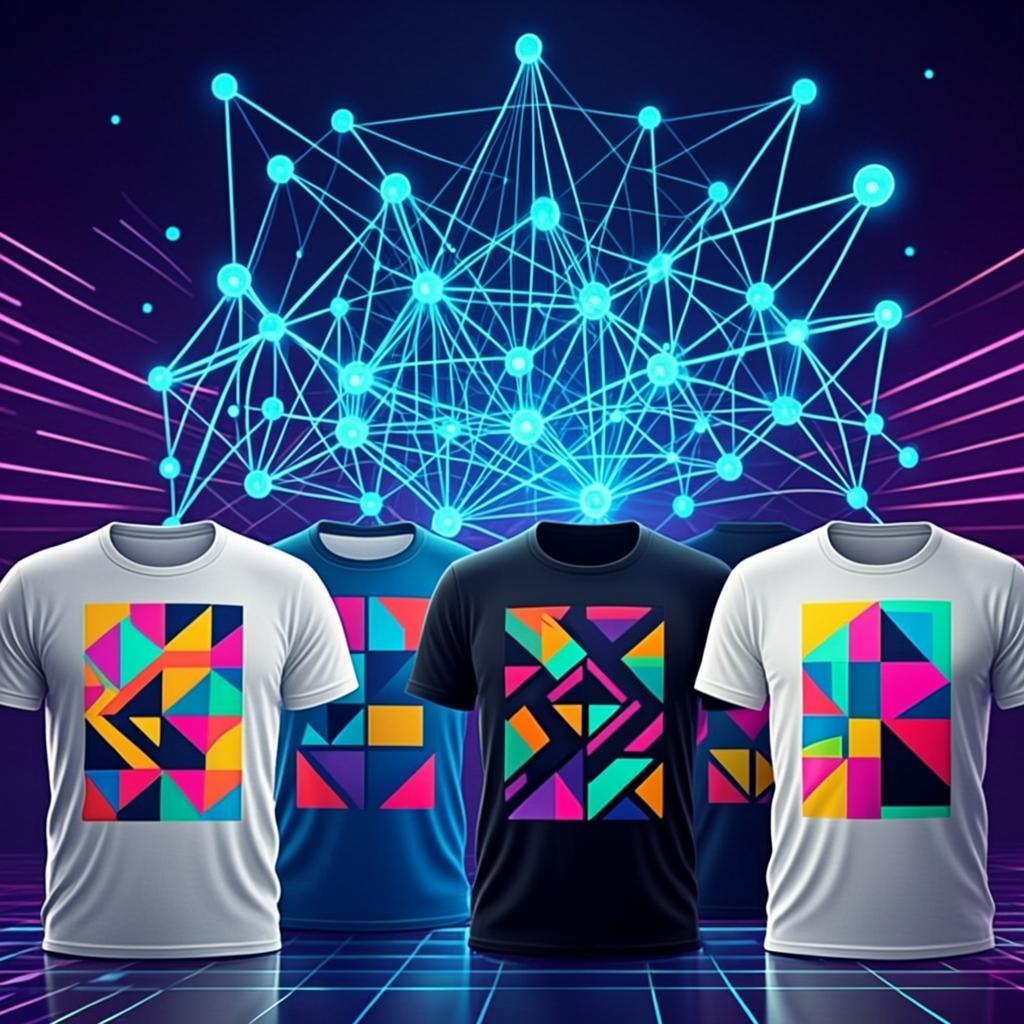
The year 2026 marks a pivotal moment for the intersection of artificial intelligence and product design in the print on demand industry. As AI technology matures and becomes more accessible, we are seeing a fundamental shift in how products are conceived, designed, produced, and personalized. For POD sellers, understanding these trends is not just about staying current — it is about positioning your business for sustainable growth in an increasingly competitive market.
In this article, we will examine the most significant AI product design trends shaping the POD industry in 2026. From hyper-personalization to sustainable design practices, these trends represent both opportunities and imperatives for forward-thinking sellers. Whether you are a solo entrepreneur or managing a growing POD operation, the insights here will help you make informed decisions about where to invest your time and resources.
Trend 1: Hyper-Personalization at Scale
Personalization has been a buzzword in e-commerce for years, but 2026 is the year it becomes truly scalable thanks to AI. In the context of print on demand, hyper-personalization means creating products that are uniquely tailored to individual customer preferences, demographics, or even real-time inputs like location or weather data.
AI makes this possible by dynamically generating design variations based on customer data. For example, a POD seller offering custom name designs can now use AI to generate thousands of unique variations that incorporate different fonts, graphics, and layouts while maintaining a cohesive brand aesthetic. The AI handles the creative variation while the seller provides the strategic framework.
This trend is particularly powerful for gift products, where personalization commands premium pricing. AI-generated custom portraits, pet illustrations, and hobby-specific designs can be produced on demand with minimal human intervention, allowing sellers to offer a truly personalized experience without the traditional costs of custom artwork.
Trend 2: AI Co-Creation Workflows
The relationship between designers and AI is evolving from a tool-user dynamic to a collaborative partnership. AI co-creation workflows represent a new paradigm where human creativity and machine intelligence work together synergistically throughout the design process.
In a co-creation workflow, the designer provides strategic direction, brand guidelines, and creative intent. The AI generates multiple variations based on these inputs, which the designer then refines, curates, and enhances. This iterative back-and-forth produces results that neither the human nor the AI could achieve alone. The human brings emotional intelligence, cultural awareness, and brand strategy, while the AI contributes speed, volume, and data-driven optimization.
Platforms like MyDesigns are pioneering this co-creation approach by integrating AI design capabilities directly into the POD workflow. Sellers can describe their design intent in natural language, receive AI-generated concepts, and then customize the results using built-in editing tools. This seamless integration eliminates the friction of switching between multiple applications and creates a more efficient creative process.
Trend 3: Sustainable Design Optimization
Sustainability is no longer a niche concern — it has become a mainstream consumer expectation. In 2026, AI is playing a crucial role in helping POD sellers adopt more sustainable design and production practices. AI-powered tools can optimize designs for minimal ink usage, suggest eco-friendly color palettes, and recommend materials with lower environmental impact.
One of the most innovative applications is AI-driven print optimization. By analyzing design files and print specifications, AI algorithms can suggest modifications that reduce material waste and energy consumption without compromising visual quality. For example, AI might recommend adjusting a design's color density to use less ink, or repositioning elements to maximize the printable area and reduce offcuts.
Additionally, AI trend analysis tools are helping sellers identify growing consumer demand for eco-conscious merchandise. Designs featuring sustainability themes, organic aesthetics, and environmental messaging are increasingly popular, and AI can help sellers capitalize on this trend by generating relevant designs at scale.
Trend 4: Real-Time Generative Customization
Imagine a customer visiting your POD store and being able to customize a product design in real-time using natural language. "Make the background blue," they type, and the AI instantly regenerates the design. "Add a star in the corner," they continue, and the AI complies. This is the promise of real-time generative customization, and it is becoming a reality in 2026.
This trend is enabled by advances in AI model speed and efficiency. Modern AI image generators can produce high-quality results in seconds, making real-time interaction feasible for e-commerce applications. Forward-thinking POD platforms are integrating these capabilities directly into the shopping experience, creating a level of interactivity that was previously impossible.
The business implications are significant. Real-time customization dramatically increases customer engagement, reduces return rates by ensuring customers get exactly what they want, and enables premium pricing for personalized products. For POD sellers, this represents a major opportunity to differentiate their offerings and increase average order values.
Trend 5: AI-Powered 3D Product Visualization
Product presentation is a critical factor in e-commerce conversion rates, and AI-powered 3D visualization is transforming how POD products are displayed online. Instead of flat 2D mockups, AI tools can now generate photorealistic 3D renders of your designs on products, allowing customers to see how items look from multiple angles and in different lighting conditions.
This technology goes beyond static images. Some platforms are implementing interactive 3D viewers where customers can rotate, zoom, and inspect products virtually. AI can even generate lifestyle images showing products in context — a t-shirt on a model, a mug on a desk, a poster in a living room — all without the cost of traditional product photography.
For POD sellers, better product visualization directly translates to higher conversion rates. Studies consistently show that customers are more likely to purchase when they can clearly visualize how a product will look in real life. AI-powered visualization makes this level of product presentation accessible to sellers of all sizes, leveling the playing field between small POD businesses and large retailers.
Trend 6: Niche Intelligence and Predictive Design
AI is revolutionizing the research phase of POD selling by providing deep insights into niche dynamics and consumer preferences. Predictive design tools analyze vast amounts of data — search trends, social media activity, purchase patterns, and competitive landscape — to identify emerging opportunities before they become saturated.
In 2026, the most sophisticated AI tools can not only identify trending niches but also predict which specific design elements, color schemes, and styles will perform best within those niches. This predictive capability allows POD sellers to be proactive rather than reactive, creating designs that align with emerging consumer preferences rather than chasing trends that have already peaked.
For example, an AI tool might identify that "cottagecore aesthetic with autumn themes" is gaining traction in home decor and recommend specific design elements like warm color palettes, botanical illustrations, and rustic typography. The seller can then use this intelligence to create a targeted collection that meets demonstrated demand.
Trend 7: Cross-Platform AI Design Systems
As POD sellers expand to multiple platforms — Amazon Merch, Redbubble, Etsy, Shopify, and more — maintaining design consistency across different marketplaces becomes increasingly challenging. AI-powered design systems address this by providing centralized design management with automatic adaptation for each platform's specifications and audience preferences.
These systems use AI to resize, reformat, and re-optimize designs for different product types and platform requirements automatically. A single design can be adapted for a t-shirt on Amazon, a sticker on Redbubble, and a poster on Etsy with minimal manual intervention. This cross-platform efficiency dramatically reduces the time and effort required to maintain a multi-channel POD business.
How to Capitalize on These Trends
Understanding these trends is valuable, but the real competitive advantage comes from implementing them in your business. Here are actionable steps you can take today to position your POD business at the forefront of AI-powered design:
First, audit your current design workflow and identify areas where AI could provide the most significant improvement. For most sellers, the biggest opportunities are in concept generation speed, cross-platform publishing efficiency, and design consistency. Second, invest in learning at least one AI design tool thoroughly rather than dabbling with many superficially. Deep expertise with one platform will yield better results than surface-level familiarity with many.
Third, start building a design system that incorporates AI at every stage, from research and ideation through creation, refinement, mockup generation, and listing optimization. A systematic approach ensures that AI enhances your entire workflow rather than being applied in isolated, disconnected steps. Finally, stay informed about emerging capabilities by following AI research publications, attending industry webinars, and participating in POD community discussions.
Start Leveraging AI Trends with MyDesigns